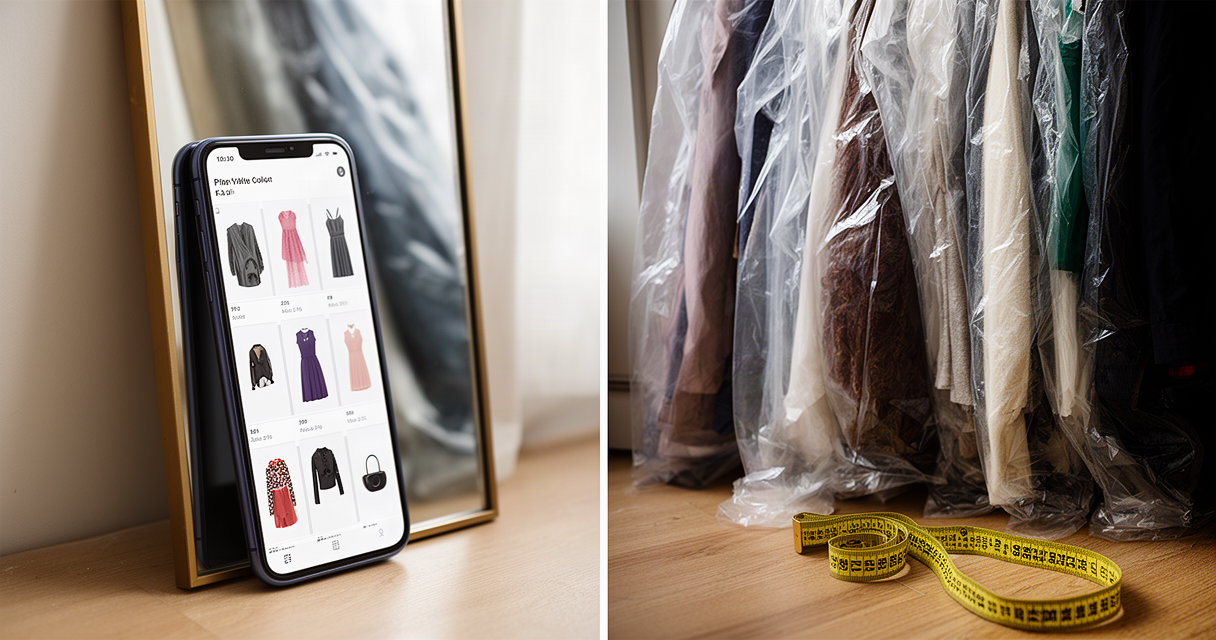
A shopper spots a $340 blazer on Instagram, screenshots it, and fifteen seconds later has three “AI dupe finder” apps promising a match for $40. The technology behind that instant swap — AI visual search that reads an image and hunts a catalog for lookalikes — is new enough that most shoppers haven’t stopped to ask where those matches actually come from.
That question matters more than the accuracy score. Copped, Dupe.com, and FetchFashion all do visual-search dupe hunting, but they’re built on different sourcing logic, and most of these tools run on affiliate commissions — which means the “best match” an app surfaces can be the one that pays the app, not the one that’s actually closest to the original or actually the better buy.
The short version: Copped is built by resellers and leans toward surfacing secondhand and resale matches, which makes it the pick for anyone trying to avoid buying new fast-fashion clones. Dupe.com and FetchFashion are faster and broader for finding the cheapest retail lookalike, but their affiliate-driven catalogs skew toward fast fashion. Which one is “best” depends on what a shopper actually wants out of a dupe.
How AI Dupe Finder Apps Actually Work
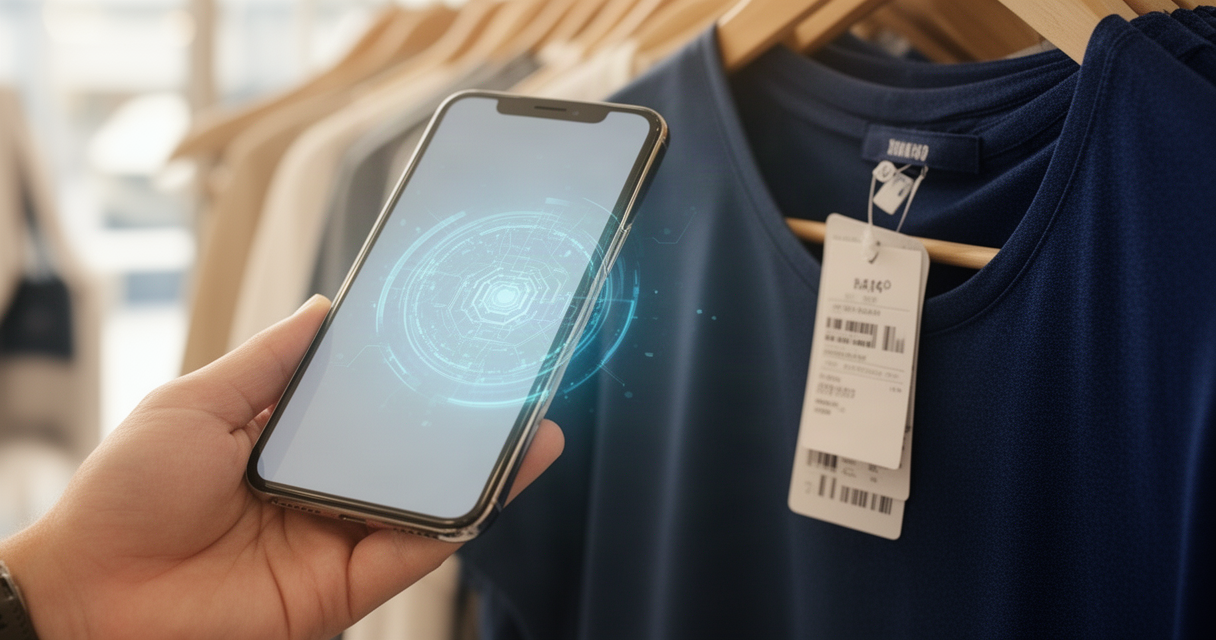
The mechanic is the same across all three: a shopper uploads a photo, a screenshot, or a product link. The app runs the image through a visual-similarity model — the AI equivalent of “find me items that look like this” rather than a keyword search — and returns a ranked list of matches pulled from a catalog of partner retailers.
The catalog is the whole game. An app that only indexes fast-fashion retailers will only ever return fast-fashion matches, no matter how good the visual-matching model is. An app that also indexes resale platforms can surface a secondhand original instead of a new clone. That distinction is where Copped, Dupe.com, and FetchFashion diverge.
Copped vs Dupe.com vs FetchFashion, by Shopper Goal
| Shopper Goal | Best Tool | Why |
|---|---|---|
| Find the secondhand/resale version of an item | Copped | Built by resellers; explicitly surfaces resale and secondhand matches, not just new clones |
| Find the cheapest new retail lookalike, fast | Dupe.com or FetchFashion | Broad retail catalogs optimized for quick price-based matches |
| Search the widest pool of retailers for one item | FetchFashion | Positions itself around visual search across 1,000+ retailers |
| Copped | Dupe.com | FetchFashion | |
|---|---|---|---|
| Sourcing focus | Resale / secondhand first | Broad retail deal-finding across categories | Retail-match focused, wide retailer network |
| Monetization | Affiliate/commission model (confirm current terms) | Affiliate-monetized | Affiliate-monetized |
| Input method | Photo, screenshot, or link (confirm current support) | Link or image, varies by category | Photo or screenshot search |
| Free tier | Free tier reported; confirm current pricing on the app | Free to use, affiliate-funded | Free to use, affiliate-funded |
| Best for | Sustainability-minded shoppers, resale hunters | Fast, cheap retail lookalikes | Broadest retail catalog coverage |
Pricing and exact feature sets on all three shift often enough that the details above should be treated as a starting point, not gospel — check each app’s current listing before assuming a specific price point.
Copped: Built by Resellers, Sources Secondhand First
Copped’s positioning is its differentiator. It was built by people who work in resale, and that shows in what the app surfaces: instead of routing every search toward a new fast-fashion clone, it explicitly indexes resale and secondhand marketplaces alongside retail. A search for a designer bag can return a preowned original at a resale price instead of a synthetic dupe made to imitate it.
That matters because a “dupe” that’s actually the real item, bought secondhand, solves the same problem — lower price — without adding a new garment to the world. Shoppers frustrated with fast-fashion clone culture on threads in r/sustainability and r/thriftstorehauls consistently point toward the same workaround: search resale platforms directly before settling for a new knockoff. Copped essentially automates that workaround inside a single search.
The tradeoff is coverage. A resale-first catalog is inherently smaller and less consistent than a retail catalog with thousands of SKUs refreshed daily — secondhand inventory is one-of-one, so a specific item might not have a match in stock at any given moment. Once a shopper has found a strong secondhand candidate through a tool like Copped, checking whether it actually sits on a resale marketplace and comparing options is worth a stop at platforms like the ones covered in Poshmark vs. Mercari, where most of that secondhand inventory actually lives.
Dupe.com: Broad AI Deal-Finding, Affiliate-Monetized
Dupe.com is built as a general AI deal-finder, not a fashion-only tool — it spans multiple product categories, with fashion as one of its larger verticals. The pitch is speed and breadth: point it at an item, get a ranked list of cheaper alternatives pulled from a wide retail network.
That breadth comes from an affiliate-driven catalog, which is standard for this category but worth naming plainly. Dupe.com earns commission on qualifying purchases made through its links, and the retailers most willing to run aggressive affiliate programs at scale tend to be fast-fashion and mass-market operations rather than boutique or resale sellers. The result is a tool that’s genuinely fast at finding a cheap retail lookalike, and genuinely more likely to point toward Shein-and-Temu-tier fast fashion than toward a secondhand original.
None of that makes Dupe.com dishonest — affiliate monetization is how nearly every free comparison tool stays free, including tools in adjacent categories. It does mean the “best match” ranking isn’t purely a similarity score; it’s a similarity score filtered through which retailers pay for placement.
FetchFashion: Visual Search Across 1,000+ Retailers
FetchFashion leans hardest into breadth, positioning itself around AI visual search across a claimed network of more than 1,000 retailers. For a shopper who wants the widest possible net cast for a single item — every retail source that might carry something close — FetchFashion’s scale is the selling point.
Like Dupe.com, FetchFashion’s model runs on retail partnerships rather than resale sourcing, so its strength is retail-match volume, not secondhand discovery. It’s the tool built for “find me anywhere this exists new,” not “find me the original, used.” Coverage that wide also means results can skew toward whichever retailers are easiest to integrate and most willing to pay for referral traffic, which tends to be the same fast-fashion-heavy pool as Dupe.com’s.
Before committing to any dupe found through a broad retail search like FetchFashion’s, sizing is the next real risk — a visually close match from an unfamiliar retailer can still run small or large. Running the pick through a tool like the ones in the best AI outfit generator roundup or checking fit first with a virtual try-on app closes that gap before the order ships.
Does “Dupe Finder” Quietly Mean “Fast Fashion Pusher”?
The category’s name promises a neutral service: find the item, cheaper. The business model behind most of these apps complicates that promise. Affiliate commissions mean a tool gets paid when a shopper clicks through and buys — and the retailers most able to fund large affiliate programs at scale are mass-market and fast-fashion operations, not the secondhand sellers and small resale marketplaces a sustainability-minded shopper might actually prefer.
That’s not an accusation of bad faith. Affiliate monetization is the standard way free tools stay free, and it doesn’t automatically mean the top match is wrong. It does mean the ranking a shopper sees isn’t purely “most visually similar” — it’s most visually similar among retailers willing to pay for the referral, and that pool leans fast fashion by default.
Copped’s resale-first sourcing is the exception that proves the point. Because it was built by people already working inside resale, it structurally includes secondhand marketplaces in its match pool instead of defaulting to whichever retail partner pays best. That’s a sourcing decision, not just a marketing claim, and it’s the reason Copped functions differently from a purely affiliate-optimized dupe finder even though it likely runs some form of commission model too.
The practical takeaway: a “dupe finder” isn’t automatically a sustainability tool just because it saves money. The tool that actually reduces waste is the one that surfaces a secondhand original as a live option — not just the one with the most retailers in its index.
Pick Copped, Dupe.com, or FetchFashion
Pick Copped if the goal is finding the secondhand or resale version of an item rather than a new clone. It’s the strongest option for shoppers who’d rather buy the real thing used than a fast-fashion imitation, and its resale-first sourcing is a genuine structural difference from the other two.
Pick Dupe.com if speed and price matter more than sourcing — a fast, cheap retail match across categories, with the understanding that the top results are affiliate-shaped and likely to skew mass-market.
Pick FetchFashion if the priority is casting the widest possible net across retailers for one specific item, particularly when a shopper isn’t concerned with whether the match is new or secondhand and just wants the broadest search.
None of the three is wrong to use. The mistake is assuming any of them is neutral by default — each has a sourcing bias baked into how it makes money, and knowing that bias is what makes the results useful rather than misleading.
Frequently Asked Questions
Do these apps actually find secondhand or resale matches, or just push fast fashion?
It depends on the app. Copped explicitly indexes resale and secondhand marketplaces because it was built by resellers, so a search there can surface a preowned original. Dupe.com and FetchFashion are built on broad retail-affiliate networks that lean toward new fast-fashion and mass-market matches by default, though results vary by item and category.
Which app has the most accurate visual match?
There’s no independently verified, apples-to-apples accuracy comparison across all three publicly available, and no hands-on test backs a specific ranking here. What can be said with confidence is that FetchFashion’s larger retailer network likely returns more candidate matches per search, while Copped’s smaller resale-focused catalog trades match volume for sourcing quality.
Are Copped, Dupe.com, and FetchFashion free to use?
All three are generally free for shoppers to search, funded through affiliate commissions on purchases made via their links. Feature limits, premium tiers, or usage caps can change, so it’s worth checking each app’s current pricing page before assuming full features are free.
How do these apps make money, and does that bias the results?
Affiliate commissions are the standard model — the app earns a cut when a shopper buys through its link. That structurally incentivizes surfacing retailers with strong affiliate programs, which tends to favor fast-fashion and mass-market sellers over boutique or resale sources, unless the app (like Copped) deliberately builds resale sourcing into its catalog.
Can these apps find dupes from a screenshot, or only from a live product link?
Most dupe finder apps in this category, including these three, are built around image-based visual search — a photo or screenshot is typically sufficient, which is the core feature that separates them from older keyword-based deal-finding tools. Support for direct product links varies by app and can change with updates, so confirming current input methods on each app before relying on a specific workflow is worth the extra minute.
The Real Dupe Is Often the Original, Used
A cheap Shein clone that falls apart after three washes isn’t a win, no matter how close the AI match looked in the app. The dupe worth having is usually the original item bought secondhand — same construction, same materials, a fraction of the retail price, and nothing new manufactured to get there.
AI visual search genuinely earns its place in that hunt: it can find a match in seconds that would take an hour of manual scrolling. The differentiator isn’t which app has the biggest catalog — it’s whether that catalog includes the secondhand option at all. Point the search toward resale, and the technology finally lives up to what “dupe finder” should have meant from the start.