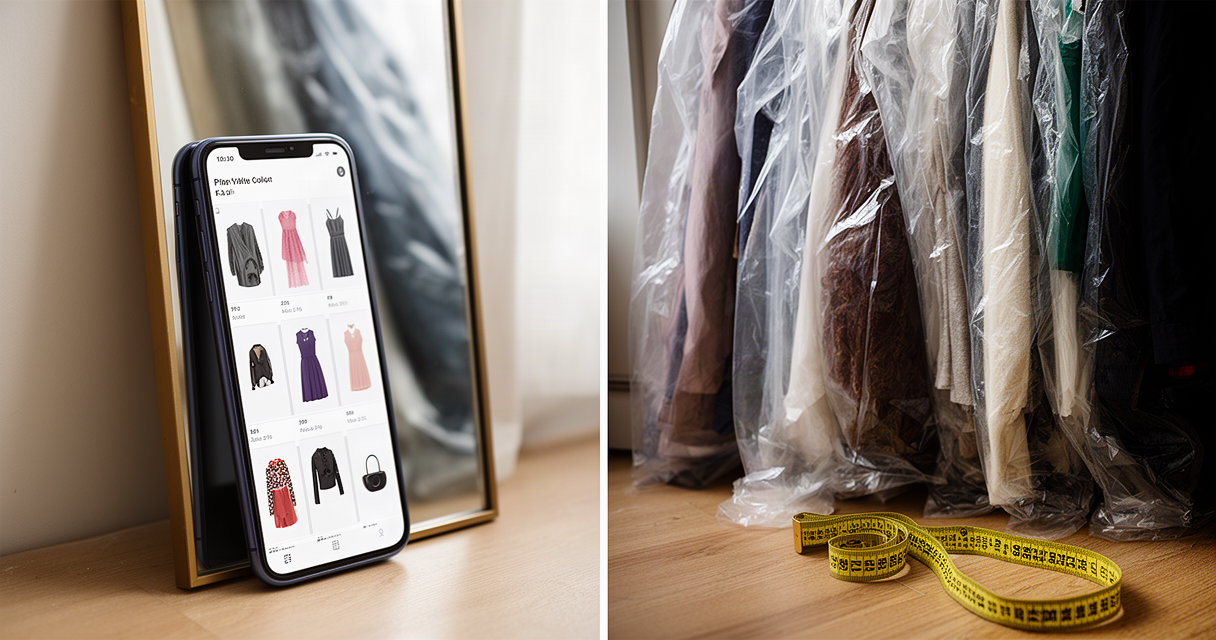
Both apps promise to solve the “I have nothing to wear” problem. One charges less than $5/month. One is completely free. And they’re built on completely different philosophies about what fashion should actually do for you.
If you’re building a capsule wardrobe, you’re not just organizing clothes — you’re trying to change how you relate to them. The app you pick either reinforces that intention or quietly undermines it.
For conscious consumers building a capsule wardrobe, Cladwell is the better pick. Whering is excellent free software with a genuine community, but its social features subtly push inspiration over intentionality. If you’re serious about wearing more of what you own and breaking the impulse-buying cycle, Cladwell’s structured approach wins.
The breakdown below covers features, pricing, and the social feature question that most comparisons skip.
Cladwell vs Whering: The Core Difference
These two apps look similar on the surface — both let you digitize your wardrobe, both offer AI outfit suggestions, both support sustainable fashion goals. But they’re built around different ideas.
Cladwell is a capsule wardrobe tool first. Its whole philosophy, from the 35+ templates to the daily outfit engine, is about building a smaller, intentional wardrobe and actually using it. The app’s ethos: “who you are, not what you buy.”
Whering is a social wardrobe app. With 7 million active users, it’s more like a fashion community with a wardrobe feature built in. You can share your outfits, see how friends style their pieces, browse moodboards. The AI “Dress Me” feature improves the more you interact with it.
For a conscious consumer, this split matters more than any feature list. Cladwell is designed to help you use what you own with focus. Whering introduces a social layer that can chip away at that focus — even with the best intentions.
Feature Comparison: What Each App Actually Does
| Feature | Cladwell | Whering |
|---|---|---|
| Wardrobe digitization | ✓ Photo + auto-categorization | ✓ Photo + 100M+ item database |
| AI outfit recommendations | ✓ Weather-aware, personalized | ✓ “Dress Me” AI, improves with use |
| Capsule wardrobe templates | ✓ 35+ templates | ✗ Open-ended, no structured templates |
| Cost-per-wear tracking | ✓ | ✓ |
| Social community | ✗ | ✓ 7M+ users |
| Outfit scheduling / packing | ✓ | ✓ |
| Style analytics | ✓ (paid) | ✓ |
| Import from retailer sites | ✗ | ✓ |
| Free tier | ✓ (closet management only) | ✓ (full core features) |
For your segment, the defining difference is the capsule wardrobe templates. Cladwell has 35+ structured templates — frameworks for building a functional, mix-and-match wardrobe from what you own. Whering doesn’t have this. If building a structured capsule is your goal, Cladwell has the right scaffolding. Whering leaves you to figure that out yourself.
Whering’s retailer import is genuinely useful — you can add items you’ve bought without photographing them. But for a conscious consumer who’s trying to buy less, that feature matters less than one might think.
Pricing: Free vs Less Than $5/Month
This is where most comparisons get lazy and just say “Whering is free, Cladwell costs money.” That’s technically true and practically misleading.
Whering: Free for core features — wardrobe digitization, the Dress Me AI, outfit scheduling, social community. 7 million users use it for free. There are optional paid tiers, but the free version is genuinely functional.
Cladwell: Free tier covers closet management only — you can organize your wardrobe but won’t get outfit recommendations or the capsule templates. The paid plan, less than $5/month, unlocks daily AI outfit suggestions, all 35+ capsule templates, cost-per-wear tracking, weather-based recommendations, and style analytics.
For a conscious consumer, the honest math: Cladwell’s free tier is too limited to be the tool you need. You need the paid features for capsule building. At under $5/month, that’s less than a single impulse coffee purchase.
According to Cladwell’s own user data (from their homepage), users report saving around $600/year and wearing 65% of their closet versus the typical 20%. If those numbers hold for even a fraction of that — if the app stops you from one unnecessary $30 purchase a month — it’s cash-positive.
That’s not a pitch for Cladwell. That’s the relevant math for someone whose goal is intentional dressing.
The Social Feature Question: Inspiration or Distraction?
Whering’s social layer is well-intentioned. Unlike Instagram, you’re seeing how real people style clothes they already own — not influencer hauls, not brand campaigns. The community’s ethos aligns with sustainable fashion.
But here’s the tension: social validation still works the same way regardless of the content.
Seeing how someone styles a piece you both own can genuinely give you ideas. But it can also trigger the comparison instinct — the same one that drove fast fashion consumption in the first place, just with a sustainable veneer.
Cladwell has zero social features. It’s completely private, completely personal. Your outfit suggestions come from your wardrobe data, your weather, your style preferences. There’s no community to browse, no outfits to like, no external signal telling you whether your look lands.
For conscious consumers actively working to develop their own style rather than crowd-sourcing it, this matters. Whering’s social features work best in inspiration mode. They’re a liability when you’re in intention mode — trying to build a consistent personal style by tuning out the noise.
Our take: AI works best when it helps you understand your own style, not when it shows you everyone else’s. Cladwell’s closed, data-driven approach aligns better with that goal. Whering’s social community, despite good intentions, reintroduces the external validation dynamic that conscious consumers are often trying to exit.
Our Take: Cladwell Wins for Capsule Wardrobe Building
For conscious consumers building a capsule wardrobe, Cladwell is the better app. The capsule templates, the daily outfit recommendations that account for what’s in your wardrobe, and the cost-per-wear philosophy are purpose-built for what you’re trying to do. Cladwell’s positioning — “who you are, not what you buy” — isn’t marketing fluff. It’s the actual design philosophy, and it shows in the features.
Whering wins if you want social inspiration and community around sustainable fashion. It’s a great app for someone who’s already clear on their style and wants to see how others approach similar wardrobes. The free price point makes it easy to try with zero friction.
Neither is wrong — they’re solving different problems. Most people trying to build a capsule wardrobe don’t need more inspiration. They need more intention. That’s Cladwell’s lane.
If you want to explore both the social and AI-styled sides of the fashion app space, check out the best AI capsule wardrobe apps roundup or browse AI styling app alternatives if you’re also considering subscription styling services.
Frequently Asked Questions
Is Cladwell worth paying for?
Yes, for capsule wardrobe building. The free tier only covers closet management — you need the paid plan (under $5/month) to access outfit recommendations, capsule templates, and cost-per-wear tracking. Those features are the point of the app for this use case. Without them, you’re just cataloging clothes.
Can you use Whering for free?
Yes — Whering’s core features including wardrobe digitization, the Dress Me AI, outfit scheduling, and the social community are all free. Over 7 million users use it without paying. The app’s value proposition doesn’t require a subscription.
Which app is better for sustainable fashion goals?
Both support sustainable fashion by helping you wear more of what you own. Cladwell’s structured capsule approach and cost-per-wear tracking are more intentionally built for the “buy less, wear more” mindset. Whering’s social community surfaces secondhand inspiration and real styling ideas — useful, but less structured. For active capsule building, Cladwell is more aligned.
Do Cladwell and Whering work on both iPhone and Android?
Yes. Both apps are available on iOS and Android.
Can I use both apps at the same time?
Technically yes — Whering for social inspiration, Cladwell for daily outfit planning. But for most people trying to build intentional dressing habits, splitting your attention between two apps adds friction. Pick the one that matches your primary goal, commit to it for 30 days, and see if it changes how you get dressed.
For a broader look at how AI styling tools complement wardrobe planning, AI color analysis apps are worth checking out alongside whichever wardrobe app you choose.
The Bottom Line
Cladwell is the better app for conscious consumers building a capsule wardrobe. Whering is the better app for style inspiration and social fashion discovery.
If your goal is to wear more of what you own and break the impulse-buying cycle, download Cladwell and try the paid plan for a month. If you want fashion inspiration from a community of people who actually care about sustainable styling, Whering’s free app delivers that without spending a cent.
The best wardrobe app isn’t the one with the most features. It’s the one that’s actually aligned with what you’re trying to do.