Every sneaker legit-check app on the App Store markets itself as “AI-powered.” Upload photos, get a verdict in minutes, sleep easy. Except two of these apps regularly return opposite verdicts on the same pair of shoes — and one founder in the space says outright that AI alone isn’t reliable enough yet to make the final call. This roundup ranks the best AI sneaker authentication apps on what can actually be verified — price, turnaround, and whether AI or a human issues the final verdict.
The stakes are not abstract. A single check runs $3 to $20-plus, and the sneakers behind it can run into the hundreds. Paying for a legit check means paying for an opinion, and it matters a great deal whether that opinion comes from an algorithm, a human, or some blend of the two that the marketing copy conveniently blurs.
The quick answer: for a lower-stakes gut check, CheckCheck or LegitApp cover it — AI pre-screen plus two human authenticators, $3 to $6, 10 to 30 minutes. For a grail purchase, a resale dispute, or anything where a documented explanation matters, Legit Check App By Ch is worth the higher price because it is 100% human, not AI-assisted. Entrupy is a different category entirely — a physical-device tool built for resellers and businesses processing volume, not a $5 photo check for one pair.
Sneakers aren’t the only category running this playbook — it’s worth seeing how bag and luxury-goods authentication services like Entrupy stack up, since the device-based model actually originated there before sneaker apps borrowed the “AI-powered” label.
What follows is a breakdown of which apps are honest about what they’re selling, which ones blur the line, and how to pick based on what’s actually on the table.
What “AI-Powered” Sneaker Authentication Apps Actually Mean
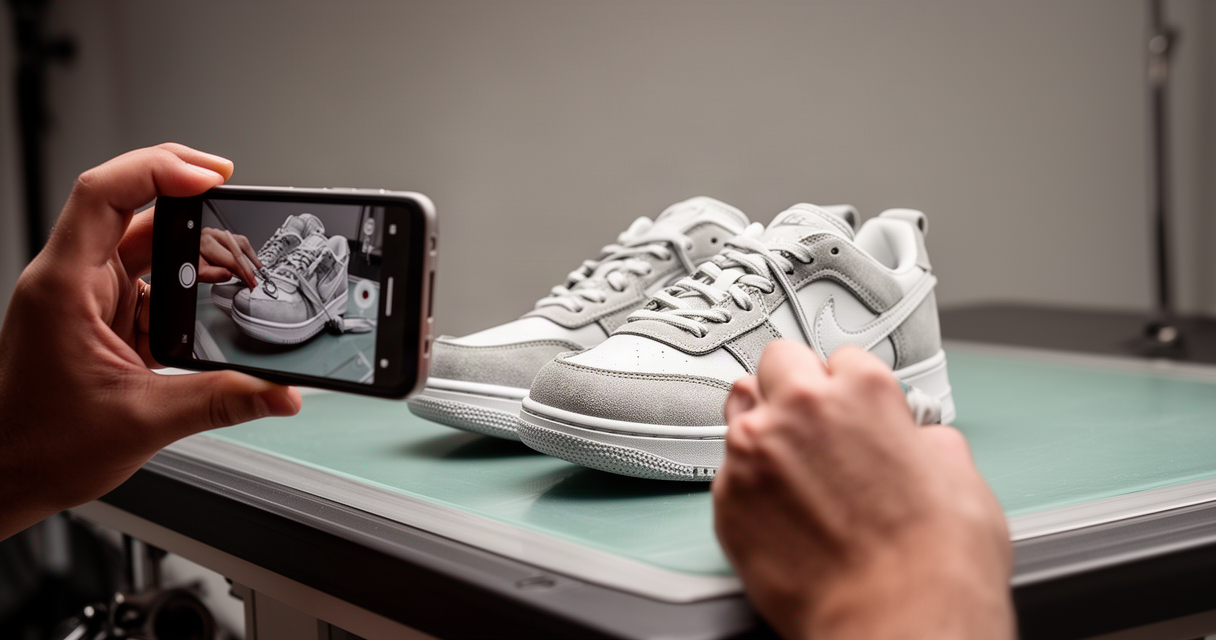
“AI-powered” in this category almost always means AI runs a first pass, then a human makes the final call. The algorithm flags obvious mismatches — stitch pattern, logo placement, box label formatting — and routes the file to a person who actually decides pass or fail.
That’s a legitimate use of AI. It’s also a very different product than “an AI authenticated my sneakers,” which is what the marketing implies.
The clearest statement on this comes from the founder of Legit Check App By Ch, discussing why the service stayed human-only in a Reddit thread. Asked about competitors leaning into AI-only verdicts, the founder said: “Human authentications are the way to go for the moment — no AI, but human.”
That’s a founder in the space, not a critic, saying the current generation of AI isn’t there yet for a final verdict. The apps that do use AI as a pre-screen aren’t wrong to use it — image comparison is genuinely useful for catching the obvious fakes fast. The problem is when “AI-powered” gets read by a buyer as “AI decided,” when in most cases a person still did.
The Name-Confusion Problem (Read This Before You Pay Anyone)
Before comparing features, a consumer-protection note: LegitApp and Legit Check App By Ch are two entirely different, unrelated companies. The names are close enough that buyers regularly confuse them — and it’s not accidental confusion the industry has cleaned up.
In the same Reddit thread referenced above, the founder of Legit Check App By Ch was asked directly about a similarly-named competitor and called it out plainly: “that’s a copycat app — not ours.”
It doesn’t stop at those two. The App Store and Google Play both list multiple near-identical apps — generic titles like “Sneaker AI,” “AI Legit Check,” and “Legit Check: AI Scanner” — from unrelated developers, with near-identical icons and marketing copy. One of these apps claims “dual-expert human review ensuring 100% accuracy” directly in its App Store description. That’s a marketing line, not an audited accuracy figure, and no legitimate authentication service — human or AI — can honestly claim 100%.
The fix is simple and worth doing every time: before paying anyone, screenshot the exact developer/publisher name listed in the app store listing, not just the app’s display name. Names are cheap to copy. A verified developer account is not.
The Best AI Sneaker Authentication Apps, Compared
| App | Price (approx.) | Turnaround | Model | Best for |
|---|---|---|---|---|
| CheckCheck | From about $6/item (some credit-bundle pricing conflicts — confirm at checkout) | About 15-30 min | AI pre-screen + 2 human authenticators | Quick gut check on a lower-value pair |
| LegitApp | $3 (30 min) / $4 (15 min) / $5 (10 min) | 10-30 min, tiered by price | AI system + 2+ senior authenticators, 24h secondary QC | Cheapest reliable option with speed options |
| Legit Check App By Ch | From about $9.99/check (up to about $20 for some categories without membership); Club $9.99/mo or $99.99/yr | Varies | 100% human — no AI in the verdict | Grails, disputes, resale where reasoning matters |
| SneakCheck / Check Sneaker | Free (basic scan) | Under 30 seconds | AI-only; optional paid “Pro Scan” human review (price unconfirmed) | Instant screen, not a final verdict |
| Entrupy | Low $69/mo (about $7/auth at 10 units), Mid $149/mo, Pay-As-You-Go from $10; token about $4.20-$5.60 | Minutes, requires physical device | Physical device + ML image-matching, business tool | Resellers/businesses authenticating volume |
CheckCheck runs an AI pre-screen followed by two human authenticators, positioned as a fast, affordable check for everyday buyers. Pricing on the official site starts around $6 per item, though some credit-bundle figures floating around conflict with that headline number — confirm the actual charge at checkout before assuming. Turnaround sits in the 15-to-30-minute range depending on load.
LegitApp is structurally similar — AI system plus at least two senior authenticators, with a verdict issued only when those authenticators align, then a secondary QC pass within 24 hours. Its pricing is the most transparent in the category: sneakers run $3 for a 30-minute check, $4 for 15 minutes, or $5 for 10 minutes. That tiered speed-pricing model is worth noting on its own — LegitApp is effectively selling queue priority, not accuracy.
Legit Check App By Ch is the outlier, and deliberately so. It’s explicitly a 100% human authentication service — no AI touches the verdict at any stage. Per-check pricing starts around $9.99 and can run up to about $20 for some categories without a membership; the Club membership at $9.99/month or $99.99/year knocks 20% off checks and includes one free monthly streetwear check. It’s the most expensive option in the roundup, and the value case rests entirely on what section four covers: documented reasoning instead of a one-word verdict.
SneakCheck (also marketed as Check Sneaker) sits at the opposite end — a free, AI-only scan that returns a result in under 30 seconds, with an optional paid “Pro Scan” that routes to human review. The Pro Scan price could not be confirmed from public sources at the time of writing. Treat the free instant scan as a screening tool, not a verdict a reseller or buyer should rely on for a real transaction.
Entrupy doesn’t belong in the same bucket as the rest, and it’s worth saying so plainly. It’s a reseller and business tool built around a physical scanning device paired with machine-learning image matching — not a service where someone photographs a pair on their phone and uploads it. Pricing runs a Low tier at $69/month (roughly $7 per authentication at 10 units), a Mid tier at $149/month, and pay-as-you-go from $10 per check, with per-token costs in the $4.20-to-$5.60 range at volume. Entrupy’s marketing cites a “99.86% accuracy” figure — that number is vendor-stated on Entrupy’s own materials, not the result of an independent third-party audit, and it should be read that way rather than repeated as fact.
The Accuracy Reality: Contradictory Verdicts and Vague Rejection Reasons
None of these apps are 100% accurate. Any claim to the contrary is marketing, not a verified result, and the community evidence backs that up directly.
On r/Repsneakers, one buyer described running the same pair through four different apps and getting a split result: three came back legit, one came back replica. Another buyer reported an even more direct contradiction — “Goat and CheckCheck say legit but Suede One says fake” — on the exact same shoes, submitted around the same time.
The rejection reasons compound the problem. A buyer on one thread reported CheckCheck citing “insole stitching” as the fail reason on a pair — and separately, a different buyer reported the identical rejection reason, “insole stitching,” on a pair independently confirmed authentic. Same phrase, opposite ground truth. Another rejected buyer wrote that the only explanation given was “inside label, no explanation, bought them at the store, 100% wasted money.” A third described getting back a rejection with a single word attached: “Appearance, how vague.”
There’s also a pattern worth naming directly: an App Store reviewer of LegitApp described support behavior during a disputed verdict as stalling — asking the buyer to “wait out the clock, request bogus new photos” rather than resolve the disagreement. That’s not evidence every dispute goes this way, but it’s a specific, credible complaint worth weighing against the app’s pricing advantage.
The underlying issue is structural, not a bug in any one app. A legit-check verdict is one photo-based opinion, not a guarantee. A camera can’t inspect stitching tension, material weight, or sole flex the way an in-hand human authenticator can — and no amount of AI pre-screening changes that limitation, because the AI is looking at the same flat images.
The counterweight is real too: the human-only model earns loyalty specifically because it explains itself. One reviewer of Legit Check App By Ch put it directly — “detailed reasoning is why I’ll only use your app” — after comparing it to services that return a verdict with no supporting detail. A wrong verdict with an explanation is at least something a buyer can evaluate. A one-word verdict is not.
Will StockX, GOAT, or eBay Accept These Certificates?
No. StockX, GOAT, and eBay’s Authenticity Guarantee all authenticate in-house, and none of them treat a third-party legit-check pass as a substitute for their own process. eBay’s program specifically routes items through Sneaker Con Digital, its own authentication partner — not any of the apps covered here. StockX has publicly advised buyers against relying on third-party “authenticity checkers” as a stand-in for its own verification.
This matters for anyone assuming a paid legit check “locks in” resale value on a marketplace like StockX or GOAT, since those marketplaces will still run their own independent check regardless of what certificate arrives with the shoes — a $5 pass from an app carries zero weight in that process. It’s worth understanding how marketplaces like StockX and GOAT that authenticate in-house actually handle verification before assuming an app certificate does anything for a listing there.
That doesn’t make the checks worthless. A third-party pass is genuinely useful for avoiding a private-sale fake — buying from an individual seller on Facebook Marketplace or Depop, where there’s no marketplace authentication layer at all. It just doesn’t transfer to marketplaces that authenticate in-house, and buyers who think it does are setting themselves up for a surprise when the marketplace’s own check disagrees.
Which One to Actually Pick, By Situation
For a lower-value pair and a fast gut check before a private purchase, CheckCheck or LegitApp cover it — cheap, quick, and good enough to catch the obvious fakes. LegitApp’s tiered pricing makes it the better value if speed isn’t urgent.
For a grail, a resale dispute, or anything where the outcome needs to be defensible — to a buyer, a marketplace, or a chargeback dispute — Legit Check App By Ch’s human-only model and documented reasoning justify the higher price.
For anyone running resale as an actual business processing dozens of pairs a week, Entrupy’s device-and-subscription model makes more sense than paying per-check across hundreds of units — the per-authentication cost drops meaningfully at volume, and the workflow is built for throughput.
For casual peer-to-peer selling, pairing a legit check with the marketplace’s own built-in protections is the more realistic approach — peer-to-peer marketplaces like Poshmark and Mercari have their own buyer-protection and return policies that matter more day to day than a third-party certificate. Sellers moving inventory across multiple platforms at once are usually better served by crosslisting tools resellers use to list across platforms than by a legit check on every single listing.
And for anyone working the designer-meets-streetwear crossover — a collab piece, a designer sneaker, an item that straddles both categories — it’s worth checking whether luxury resale platforms with their own in-house authentication cover it before paying a sneaker-specific app for something outside its usual lane.
Who Should Skip All of These
Buying for personal use and mainly trying to tell authentic from replica for peace of mind, rather than resale or dispute purposes, community sub knowledge — r/Repsneakers, r/FashionReps threads comparing known batches — is often more specific and more useful than a generic paid verdict, and it’s free.
If the item is headed to a marketplace with its own authentication anyway, paying for a separate third-party check first is often redundant — the marketplace’s own process is the one that actually counts, so a buyer might reasonably skip the extra charge.
For anything genuinely high-value or structurally complex — a rare collaboration, a pair with a questionable paper trail, anything where thousands of dollars ride on the outcome — no photo-based app, AI-assisted or human, replaces an in-hand expert. Photos have limits no authenticator can fully work around.
Frequently Asked Questions
Are these apps actually using AI?
Most of them, yes, but as a pre-screening step — not as the source of the final verdict. CheckCheck and LegitApp both run AI image analysis before routing to human authenticators who issue the actual pass/fail. SneakCheck’s free scan is genuinely AI-only. Legit Check App By Ch uses no AI at all in its verdict process.
Which app is most accurate?
None of them can be verified as most accurate, because none publish independently audited accuracy figures — Entrupy’s “99.86%” claim is vendor-stated, not third-party audited. The strongest evidence available is qualitative: the human-only model’s detailed reasoning gets more credible feedback than one-word verdicts, but that’s not the same as a proven accuracy edge.
Will StockX or GOAT accept a legit-check certificate?
No. Both authenticate in-house and don’t treat third-party passes as a substitute for their own process. The same applies to eBay’s Authenticity Guarantee, which routes through Sneaker Con Digital rather than any consumer legit-check app.
Why do CheckCheck and LegitApp sometimes disagree on the same pair?
Both use AI pre-screening plus human review, but different authenticators, different training, and photo quality can all shift the call on a borderline pair. Community threads document real cases of the same shoes getting opposite verdicts across apps, which is the clearest evidence that no single check should be treated as final.
Is LegitApp the same company as Legit Check App By Ch?
No — they are unrelated companies with similar names. Legit Check App By Ch’s founder has directly called out a similarly-named competitor as a “copycat app” in community discussion. Confirm the exact developer name before paying either one.
Is Entrupy worth it for casual resale?
Generally not. Entrupy’s subscription and per-token pricing is built for volume — its cost advantage only shows up when authenticating dozens of items a month. A casual seller doing a handful of pairs a year is better served by a per-check app like CheckCheck or LegitApp.
How much does a sneaker legit check typically cost?
Roughly $3 to $6 for AI-assisted services like LegitApp and CheckCheck, and $9.99 to about $20 for the human-only Legit Check App By Ch without a membership. Entrupy’s business pricing runs $69 to $149 per month or pay-as-you-go from $10, depending on volume.
The Bottom Line
No app in this category is a guarantee, and the marketing around “AI-powered” and “99% accuracy” should be read with that in mind. The better move is matching the check to the stakes: cheap AI-assisted services for a fast gut check, the pricier human-only option when real money or a dispute is on the line, and Entrupy only for anyone actually running resale as a business.
Before paying anyone, confirm the exact app and developer name — the copycat problem in this category is real, and the wrong tap costs money for nothing. And whatever verdict comes back, remember it’s one opinion, not a guarantee against a marketplace running its own check later and disagreeing.
The apps aren’t lying when they say “AI-powered” — they’re just letting buyers assume that means more than it does.