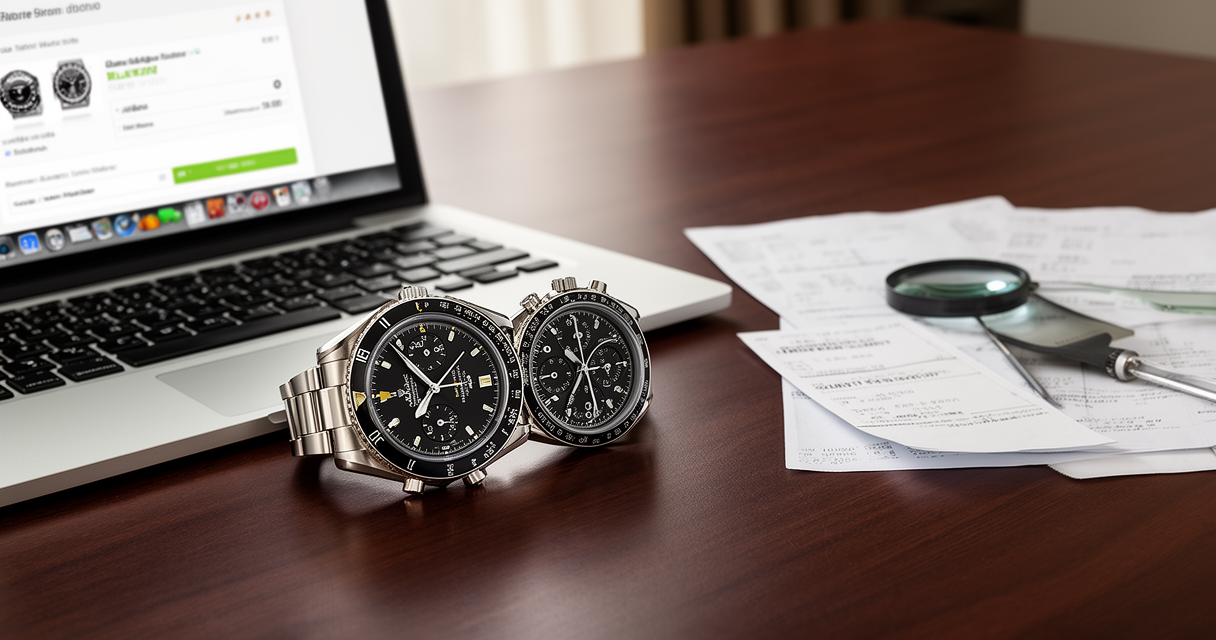
Selling a luxury watch means choosing between Chrono24, Bezel, and WatchBox — three platforms that look similar on the surface but operate on fundamentally different models. The wrong choice can mean a three-month wait, a 12% fee at payout, a rejection letter from an authenticator, or accepting $2,000 under what the market would actually bear.
Quick verdict: For high-value or globally rare references — Rolex sports models, AP Royal Oaks, Patek complications — Chrono24’s global marketplace offers the widest buyer pool and the highest price ceiling, but documented seller-protection gaps make escrow less safe than it sounds. For US-based sellers with a clean, desirable reference in the $2,000–$8,000 range, Bezel’s authentication-first model removes most of the buyer-dispute risk — if the watch passes, and approximately 1 in 3 didn’t in 2025. When speed or simplicity matters more than squeezing the last dollar, WatchBox’s direct-buyout model is often the rational choice, not the consolation prize. And r/watchexchange private sales can net more than any of the three — but they carry the highest scam exposure and belong in the hands of experienced sellers only.
This is a platform-selection guide. Watch values fluctuate and no resale channel guarantees a specific price — that note stands once and applies throughout.
For broader context on how luxury authentication platforms compare on fees and payout speed, the landscape beyond watches follows similar structural patterns.
How Each Platform Actually Works (The Model Matters)
Treating Chrono24 and Bezel as interchangeable is the most expensive mistake a first-time watch seller makes. They are not the same kind of platform.
Chrono24 is an open global marketplace. Private sellers list their own watches, set their own prices, manage buyer inquiries, and ship directly to buyers. Trusted Checkout is the payment layer — it holds funds in escrow until the buyer confirms receipt or the holding period expires. The commission is approximately 6.5%, deducted at payout; verify the current rate at chrono24.com before listing.
Bezel operates as an authenticated marketplace. The seller lists and sets a price, but when a buyer purchases, the watch ships first to Bezel’s Los Angeles facility for a multi-point in-house authentication review. Only then does it ship to the buyer. The fee structure slides from approximately 6.5% (higher-volume sellers) up to approximately 12% for new sellers, with a $225 minimum per sale; verify current tiers at getbezel.com.
WatchBox — now operating as The 1916 Company following a rebrand and approximately $165 million in expansion funding (verify: National Jeweler) — is not a marketplace at all. It is a direct dealer. Sellers submit watch details and receive a buyout quote. Accept it, ship the watch with their insured label, and receive payment on receipt and inspection. The seller pays zero commission because WatchBox’s margin comes from resale. This distinction changes everything about how to evaluate the number they offer.
eBay functions as a useful baseline. On watches priced at $2,000 or above, eBay’s Authenticity Guarantee is mandatory and free for sellers — the watch ships to an authenticator before reaching the buyer, similar in concept to Bezel’s model. The final value fee runs approximately 12.9% (verify at eBay’s fee schedule). For sellers comfortable navigating eBay’s interface, it provides structured buyer protection that many r/Watches threads treat as underrated. For a deeper look at resale platform fee structures and seller protections in adjacent markets, the authentication-intercept model eBay uses mirrors what’s increasingly standard across luxury categories.
Chrono24: The Global Price Ceiling — With a Seller-Protection Gap Worth Understanding
Chrono24’s value proposition is reach. With millions of registered buyers globally, it is the most likely venue to find the collector willing to pay full market value for an unusual reference, a discontinued dial variant, or a complication with limited demand domestically. No other platform in this comparison comes close on international audience.
Fees and payout timing
The seller commission is approximately 6.5%, deducted at the point of payout — verify the current rate at chrono24.com. There is no listing fee for private sellers. Under Trusted Checkout, payout occurs within 7 days of the buyer confirming receipt; if the buyer does not confirm, the maximum hold is 14 days (verify at the Chrono24 FAQ). Verified commercial dealers with a Trusted Seller badge receive automatic payout on delivery — a materially better experience than private sellers.
The escrow reality: what Trusted Checkout protects and what it doesn’t
This is the part most Chrono24 guides skip. Trusted Checkout holds funds. It does not intercept the watch. In a standard private listing, the watch ships directly from seller to buyer before any authentication occurs. If the buyer claims the wrong item was received, or opens a credit card chargeback — including through issuers who are unusually buyer-favorable — the seller enters a dispute while the buyer holds the watch and the escrow funds are frozen.
The community documentation on this is not theoretical. One r/Watches seller described the experience in detail: “I sold a watch on Chrono24, the buyer attempted to scam me, and as a result I had to fight Chrono24 for two whole months to get paid, all while I didn’t have possession of the watch. They basically left me on my own.”
A separate r/Watches account described a rock-in-the-box substitution — one of the more documented scam patterns on open watch marketplaces — where the outcome was unambiguous: “the buyer removed the watch, placed a rock in the case, took a photo claiming that’s what he was sent, and opened a dispute. Chrono24 sided with the buyer… Escrow protects buyers, sellers are left exposed.”
Chrono24 does offer a separate “Certified” service where the watch ships to Chrono24 for inspection before delivery — but this is not the default experience and carries its own fees and timelines.
Who should use Chrono24
Chrono24 is the strongest choice for globally rare references where domestic platforms cannot reach the buyer willing to pay the right price. It is also the only realistic option for non-US sellers, since Bezel and WatchBox are effectively US-focused operations. The platform works best for patient sellers with established documentation practices — video-record every packing step, keep all buyer communications in-platform, and understand that escrow dispute risk is structural to the card-plus-escrow model, not an edge case.
First-time sellers, those with watches under $5,000 where Chrono24’s fees and wait time compress the advantage, and sellers with watches that are more common on the US market should evaluate Bezel or WatchBox first.
Bezel: US-Authenticated Marketplace — But One in Three Watches Gets Rejected
Bezel’s model solves the single biggest seller anxiety on open marketplaces: the direct ship. Because every purchase routes the watch through Bezel’s LA facility before reaching the buyer, the substitution-scam attack vector that r/Watches sellers describe on Chrono24 is effectively closed. Buyers know this, and buyer confidence drives faster sales on desirable references.
How the authentication works
Bezel’s authentication program is led by Ryan Chong, a former Sotheby’s watch specialist, with a multi-point inspection covering movement, case, dial, and provenance documentation. Watches that pass are listed with Bezel’s authentication badge. Watches that fail have the sale canceled and the watch returned to the seller.
Authentication is not a guarantee against all fakes — no commercial authentication program is — but Bezel’s interception model reduces the direct-ship risk substantially compared to an open listing. The platform has reportedly surpassed approximately $1 billion in listed watch inventory (verify: WatchPro), a signal of both scale and buyer trust.
The rejection rate sellers need to know
The statistic that changes planning: approximately 34% of watches submitted to Bezel in 2025 were rejected, up from approximately 29% in 2024 and approximately 23% in 2023. The average rejected watch value was approximately $10,679 (verify: Bezel 2025 Annual Report). These are watches that were submitted, listed by a seller, purchased by a buyer — and then did not survive authentication. The sale cancels, the buyer is refunded, and the seller needs a different channel.
Common rejection causes include undisclosed service parts, dial inconsistencies from non-factory service, and case modifications. If a watch has had third-party service work or any non-original components, Bezel may reject it even if it is otherwise genuine. Know the watch’s service history before banking on Bezel as the plan.
Fees and payout
The fee slides from approximately 6.5% for higher-volume sellers to approximately 12% for new sellers, with a $225 minimum per sale — verify current tier thresholds at getbezel.com. The seller’s account is credited when authentication clears; ACH withdrawal then takes approximately 5 business days. Total time from submission to funds typically runs around 7–10 business days after purchase, assuming the watch passes.
Who should use Bezel
Bezel is the cleanest option for US-based sellers with watches in the $2,000–$8,000 range that have documented provenance, original parts, and no modification history. The fee is higher than Chrono24 for new sellers, but the authentication-intercept model removes the direct-ship exposure that dominates r/Watches’ cautionary threads. For first-time sellers who want a structured process without managing buyer inquiries, Bezel’s concierge-style flow is easier operationally.
If the watch has any service history uncertainty, a Bezel rejection followed by an alternate sale adds 2–3 weeks. Have a fallback — Chrono24 or WatchBox — before submitting.
WatchBox (The 1916 Company): Instant Cash, No Fees — But a Lower Number
WatchBox’s offer is genuinely different from a marketplace: it is a dealer purchase. The company buys the watch for its own retail inventory. There is no listing period, no buyer inquiry management, no authentication dispute, and no seller commission.
How the offer process works
Sellers submit watch details and photos through the WatchBox website or by phone. The quote comes back typically within one business day. Accept, and WatchBox sends an insured shipping label. Payment issues on receipt and inspection — typically within a day or two of the watch arriving. No fees, no waiting for a buyer.
The number will be below market retail. That is the model. WatchBox needs a margin to resell. For very high-end pieces, r/Watches discussions put dealer buyouts at roughly 20–35% below market; the gap narrows when demand is strong and the watch comes with full box and papers. For a $3,000 Omega Seamaster in good condition with documentation, the real-world gap between a WatchBox offer and Chrono24 net (after 6.5% fee, shipping, and 2–4 weeks of wait) may be $300–$600 — figures that vary by watch and market conditions.
Trade and consignment alternatives
WatchBox also offers trade-in value toward a purchase (useful if the seller intends to buy another watch) and consignment (higher payout than outright purchase, slower exit). Consignment at WatchBox may close the price gap with Chrono24 while avoiding open-marketplace exposure — worth asking about for mid-to-high value pieces where the seller has time.
When taking the lower offer is the right move
Many sellers treat a below-market buyout offer as a negotiating failure. For a meaningful portion of the selling population, it is the correct outcome.
A first-time seller with a $3,000 watch who does not want to manage escrow disputes and chargeback exposure on an open marketplace gets something real from WatchBox: certainty. One r/Watches seller reflected the calculus clearly: “I took the easy way out and perhaps lost around $600 after factoring in Chrono fees. But I was OK with that for my peace of mind.”
WatchBox is also the right call when urgency is genuine — needing cash within a week rules out both Chrono24 (7–14 day escrow post-delivery) and Bezel (7–10 days post-authentication, assuming it passes). And for watches with condition issues or less-liquid references that would likely sit unsold on Chrono24, a confirmed offer beats an optimistic listing price that never converts.
For watches at the higher end — five figures and above — the community consensus is more skeptical of the buyout. One r/Watches comment on a $30,000 AP sale put it bluntly: “For a grand on a 30k watch I’d sell to a dealer, not worth the risk.” That calculus makes sense when the dollar gap between dealer offer and market value reaches into the thousands rather than the hundreds.
Platform Comparison at a Glance
All fees and timelines are approximate as of 2026 and subject to change — verify at each platform before listing.
| Platform | Model | Seller fee | Payout speed | Pre-ship auth | Reach | Best for | Biggest risk |
|---|---|---|---|---|---|---|---|
| Chrono24 | Open marketplace | Approx. 6.5% | 7–14 days post-delivery | No (standard listing) | Global | Rare/high-value grails, non-US sellers | Buyer dispute + chargeback freezes escrow |
| Bezel | Authenticated marketplace | Approx. 6.5–12% + $225 min | Approx. 7–10 biz days post-auth | Yes, in-house LA | US-focused | Clean mid-market references, first-timers | 34% rejection rate — watch may not list at all |
| WatchBox | Direct dealer buyout | 0% seller fee | On receipt and inspection (fast) | Internal eval | Primarily US | Instant liquidity, sub-$5k, first-timers | Offer below market — not a marketplace price |
| eBay | Open marketplace | Approx. 12.9% | Varies | Yes ($2k+, mandatory) | US / global | Experienced sellers, sub-$5k volumes | Highest fee of the four; open-marketplace exposure |
eBay’s Authenticity Guarantee on $2,000+ watches — which intercepts the watch before buyer delivery — is structurally similar to Bezel’s model and is often overlooked by sellers focused on Chrono24.
Decision Guide: Which Platform for Your Situation
High-value or rare grail ($10,000+): Chrono24, or a specialist dealer
At this price point, the global buyer pool matters. A Patek Nautilus, an AP Royal Oak in an unusual configuration, or a discontinued Rolex dial variant may simply not find the right buyer on a US-only platform. Chrono24’s reach is the argument.
The counterargument is equally specific: the chargeback risk is real, and the dollar loss in a dispute on a $15,000 watch is not a recoverable inconvenience. Document every step — video-record packing, ship with signature required, keep all communications inside Chrono24’s platform. For some sellers, a dealer offer $1,000–$2,000 below market is the rational risk-off trade rather than managing escrow exposure on an open platform.
Mid-market desirable reference ($2,000–$8,000): Bezel first, Chrono24 as fallback
A Rolex Explorer, an Omega Speedmaster Professional with box and papers, a TAG Heuer Carrera in good condition — these are Bezel’s core inventory. Authentication adds confidence that drives buyer conversion, and the direct-ship exposure is removed. The fee is higher for new sellers (closer to 12% plus the $225 minimum), but the cleaner process justifies it for many first-time sellers.
Plan for the possibility of rejection. If the watch has had third-party service, a dial cleaning, or any non-original components, Bezel may decline it. Chrono24 is the natural next move — the watch has been prepped and documented at that point.
Sub-$2,000: WatchBox or eBay
At this price point, Chrono24’s 6.5% commission plus wait time compresses into something close to the WatchBox gap. Bezel’s $225 minimum fee changes the calculus — on a $1,500 watch, that minimum alone represents 15% before the percentage tier applies.
WatchBox may decline below certain thresholds depending on the reference and condition; check before assuming they’ll take it. eBay with Authenticity Guarantee is a legitimate option for sellers comfortable with the platform. For watches under $2,000 that fall outside traditional luxury categories, general resale platforms if your watch falls below luxury-market thresholds may warrant a look.
Need cash within a week: WatchBox
Only WatchBox consistently delivers payment within days of submission. Chrono24’s escrow holds for 7–14 days post-delivery, and Bezel’s authentication process takes additional time on top of shipping. If the timeline matters, WatchBox is the only realistic option among the three.
First-time seller worried about scams: Bezel or WatchBox
Both close the primary attack vector — the direct ship from seller to unknown buyer — that drives most of the loss stories in r/Watches. Bezel intercepts via authentication; WatchBox intercepts by being the counterparty itself. Neither exposes the seller to a buyer claim after delivery.
Non-US seller: Chrono24
Bezel operates as a US-focused marketplace. WatchBox’s buyout process is also primarily US-oriented. Non-US sellers have Chrono24 as the primary platform with genuine international scale.
Private sale via r/watchexchange: highest ceiling, highest risk, experienced sellers only
The watch community’s private-sale forum eliminates all platform fees, which on a $5,000 watch represents $325–$600 in immediate savings. The tradeoff is payment risk. Transactions commonly use PayPal Friends and Family, Zelle, or wire transfer — all methods with effectively zero recourse if the deal goes wrong. Both parties carry exposure. r/watchexchange is appropriate for sellers with established community history and buyers with verifiable reputation. For everyone else, the fee savings do not justify the risk. Sellers who want to reach audiences beyond one platform should also consider crosslisting tools to expand your resale reach beyond a single platform.
What the Watch Community Actually Says
The r/Watches and r/watchexchange communities have produced a body of selling experience that is more informative than any platform’s marketing. The consistent theme is that Chrono24’s escrow is better protection for buyers than sellers.
The rock-in-the-box incident documented in r/Watches is one of the more extreme examples, but the structural problem it reveals — “Escrow protects buyers, sellers are left exposed” — comes up across multiple threads, not just in edge cases.
The multi-month freeze case is particularly instructive: “I sold a watch on Chrono24, the buyer attempted to scam me, and as a result I had to fight Chrono24 for two whole months to get paid, all while I didn’t have possession of the watch. They basically left me on my own.” Two months without the watch and without the money is not a theoretical risk — it happened on a real transaction, with a real platform payout window that does not account for disputed items.
Against this, eBay’s Authenticity Guarantee gets better community marks than its reputation suggests. One r/Watches seller on a $16,000 watch sale: “In less than a week it is sold… eBay held the money while I ship to authenticator. They authenticated same-day, shipped to the buyer, and released my funds. Total fees were 5.4%… zero opportunity for a clawback.” That outcome — fast, authenticated, clean exit — is possible on eBay for sellers willing to navigate the platform.
The dealer-vs-marketplace question at higher price points has a clear community bias: accept a $1,000 discount for certainty rather than manage open-marketplace exposure on a five-figure asset. The exact framing that came up in a r/Watches discussion of a $30,000 AP: “For a grand on a 30k watch I’d sell to a dealer, not worth the risk.” Not everyone agrees, but that view is not the minority position.
The mixed-outcome case captures the real decision many sellers face: “I took the easy way out and perhaps lost around $600 after factoring in Chrono fees. But I was OK with that for my peace of mind.” The $600 loss is real. So is the peace of mind. Both are valid inputs to the decision.
Frequently Asked Questions
Does Chrono24 authenticate watches before the buyer receives them?
No — standard listings ship directly from seller to buyer. Chrono24 offers a separate “Certified” service where the watch ships to Chrono24 first, but it is not the default experience and carries its own fees and timelines. Trusted Checkout holds funds but does not intercept the watch. eBay (on watches $2,000 and above) and Bezel both authenticate before the buyer receives it — a structurally different model for seller protection.
What happens if Bezel rejects my watch during authentication?
The sale cancels and the watch is returned to the seller; the buyer receives a full refund. Approximately 34% of watches submitted in 2025 were rejected — verify the current figure at the Bezel 2025 Annual Report. Common rejection causes include undisclosed service parts, dial inconsistencies, and case modifications. Sellers in this situation typically move to Chrono24 as the next step, or request a WatchBox quote for a direct buyout.
How much less will WatchBox offer compared to selling on Chrono24?
There is no published formula. r/Watches discussions put dealer buyouts at roughly 20–35% below market for high-end pieces; the gap narrows considerably with strong demand and full box and papers. The more relevant comparison is WatchBox’s offer versus Chrono24 net — list price minus approximately 6.5%, minus shipping, minus 2–4 weeks of wait. For watches under $5,000, the real-world gap often falls in the $300–$600 range depending on the watch. For many sellers, that is the price of certainty and speed, not a loss.
Is Bezel available to sellers outside the US?
Bezel currently operates as a US-focused marketplace; verify current seller eligibility at getbezel.com before listing. Non-US sellers generally have Chrono24 as the primary alternative with a large, authenticated international buyer pool.
What is the safest way to sell a watch worth $20,000 or more?
The r/Watches community prioritizes seller protection over price maximization at this level. The most-cited options in order: (1) Chrono24 with Trusted Checkout, full video documentation of packing, all communications in-platform, accepting that escrow dispute risk is real; (2) a reputable dealer like WatchBox for instant liquidity and zero dispute risk, at the cost of a below-market offer; (3) Bezel for US sellers if the watch passes authentication, since the interception model eliminates the direct-ship problem. eBay’s Authenticity Guarantee has performed well for high-value sales documented in community threads, closing one $16,000 sale with 5.4% total fees in under a week. Avoid PayPal Friends and Family or Zelle for five-figure watches — recourse is effectively nil.
Get All Three Numbers Before You Decide
Bezel is the cleanest option for US-based sellers with a documented, unmodified reference in the mid-market range. WatchBox is underrated — not as a consolation, but as a genuine answer for first-time sellers, sub-$5,000 watches, and situations where certainty and speed matter. Chrono24 earns its position at the top for rare grails and non-US sellers, but treat the escrow as buyer protection, not seller protection, and document accordingly.
Before listing anywhere: run a free Chrono24 market-value check against recent sold listings, request a WatchBox quote (typically turnaround in one day), and if US-based with a clean watch, submit to Bezel to see whether it passes authentication. All three numbers are available within roughly 48 hours, and at that point the right choice is usually obvious.
The platform is a financial decision as real as the asking price — and the sellers who regret it are almost always the ones who only looked at one option.
References
- Chrono24 seller fees and Trusted Checkout FAQ — https://www.chrono24.com/info/sell.htm
- Bezel Help Center — seller fee tiers, $225 minimum, payout timelines — https://help.getbezel.com
- Bezel 2025 Annual Report — authentication rejection rate (34%), average rejected value ($10,679) — https://www.getbezel.com
- WatchPro — Bezel surpasses $1 billion in listed watch inventory — https://www.watchpro.com
- National Jeweler — WatchBox (The 1916 Company) expansion funding — https://www.nationaljeweler.com
- eBay Authenticity Guarantee for watches — mandatory on $2,000+ listings, seller fee schedule — https://www.ebay.com/help/selling/fees-credits-invoices/selling-fees
- r/Watches — seller dispute thread, buyer chargeback freezing escrow for two months — https://www.reddit.com/r/Watches/
- r/Watches — rock-in-the-box substitution scam, Chrono24 buyer-sided dispute outcome — https://www.reddit.com/r/Watches/
- r/Watches — $16,000 eBay sale, Authenticity Guarantee, 5.4% total fees, no clawback — https://www.reddit.com/r/Watches/
- r/Watches — $30,000 AP sale, dealer vs. marketplace risk discussion — https://www.reddit.com/r/Watches/
- r/Watches — seller accepting $600 loss for peace of mind vs. Chrono24 escrow exposure — https://www.reddit.com/r/Watches/