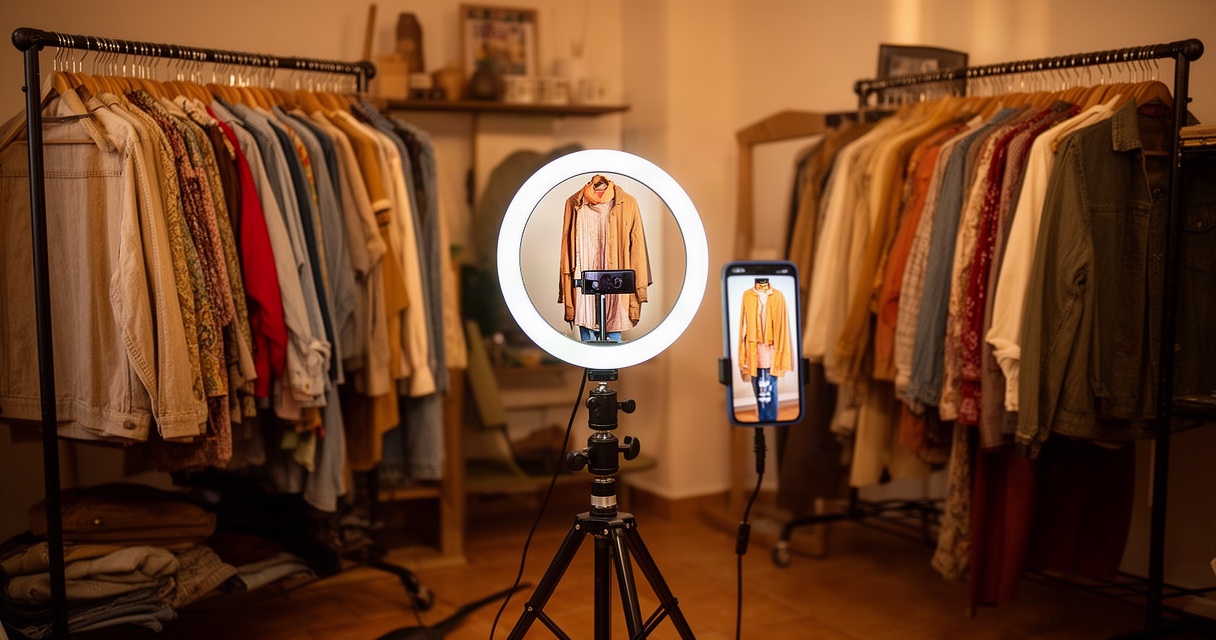
Whatnot sellers in r/whatnotapp have spent much of 2026 asking a version of the same question: is it time to move to TikTok Shop. Viewer counts on some shows have dropped, commission math has gotten murkier, and TikTok’s reach is hard to ignore.
The stakes are real. A seller’s platform choice determines who sees the inventory, what buyers are willing to pay for it, and how much of that payment actually lands in the bank. Switching platforms mid-business also means rebuilding an audience from zero.
The short answer: the fee difference between Whatnot and TikTok Shop for apparel is smaller than most threads suggest, and it is not the reason to switch. The real drivers are buyer price expectations and how each platform’s algorithm decides who gets seen. Both point toward a specific, conditional answer rather than a blanket one.
The breakdown below sorts that answer by situation — where a switch pays off, where staying put still wins, and where running both is the actual move.
The Fee Gap Everyone Cites Doesn’t Hold for Apparel
Whatnot’s own fee schedule charges apparel and clothing sellers 8% commission plus 2.9% + $0.30 in payment processing, applied to the total order value. There’s no separate listing fee. Sellers in r/whatnotapp independently confirm the same structure — one four-year seller summarized it flatly: “sellers get slammed with the 14% commission on top of all that” when factoring in shipping and other line items buyers see at checkout.
TikTok Shop’s referral fee runs 2% to 8% depending on category, and apparel sits at the top of that range at 8% — not the flat 5-6% figure that circulates in comparison threads. TikTok adds a flat $0.30 per order and, notably, no separate percentage-based processing layer on top of the referral fee.
Run the math on a $50 clothing sale. Whatnot’s stack (8% + 2.9% + $0.30) comes out to about $5.75 in total fees. TikTok’s stack (8% + $0.30) lands around $4.30. TikTok comes out ahead, but by roughly $1.45 on that sale — not the dramatic gap the “Whatnot takes 14%, TikTok takes 5%” narrative implies.
Two more caveats matter. Whatnot’s 0% commission on the portion of an order above $1,500 is scoped to select categories — Bags & Accessories and Jewelry & Watches — not general apparel, so it doesn’t move the needle for most clothing sellers. TikTok Shop also runs a new-seller promotional discount on referral fees, but the exact window varies by source; sellers should confirm the current terms in their own Seller Center rather than trust a screenshot from six months ago.
Once processing is counted on both sides, apparel take-home is close. That closeness is the point — if the fee gap were the real story, this would be a short article.
Switch to TikTok Shop When These Conditions Line Up
The current audience is already on TikTok. Sellers building from scratch, or whose existing following skews younger and video-native, are starting closer to TikTok’s native discovery engine than to Whatnot’s live-auction crowd.
Reach has stalled or been cut on Whatnot. One beauty seller in r/whatnotapp described exactly this: “Last fall our shows were abruptly slashed from 75-100 viewers down to 25-30. It was an overnight action by whatnot… We are pivoting our business away from whatnot.” A sudden, platform-driven reach cut is a legitimate switching trigger — it signals the algorithm, not the inventory, is the constraint.
Inventory sells well through short video, not live auction pacing. TikTok Shop rewards content that drives clicks and cart adds per video; a seller whose strength is a strong product photo and a sharp caption, rather than live hosting energy, is better matched to that format.
The seller wants broader top-of-funnel discovery over a built-in buyer audience. An established seller in r/whatnotapp who’d already crossed $100k in revenue and 10k followers put the calculus this way: “As of the last few weeks sales on whatnot have been increasingly down… I myself have heavily been contemplating transitioning to TikTok. They have a much wider reach and much better seller support.” The seller framed it as a real consideration, not a guaranteed win — reach is not the same as conversion.
Stay on Whatnot When These Conditions Hold
The business runs on curated, higher-ASP vintage or archival pieces. Whatnot’s live-auction format lets a knowledgeable host build value in real time — narrating condition, provenance, and rarity in a way a 30-second TikTok video can’t replicate. One r/Flipping seller reported their household vintage business “regularly make[s] $2k in a 4 hour live show” after moving a 12-year Etsy operation to Whatnot.
The seller already has an engaged live-show audience. Repeat buyers who show up for specific hosts are an asset that doesn’t transfer to a new platform. Rebuilding that trust on TikTok Shop from zero has a real cost, even if the fee structure is marginally better.
Buyers expect live-auction pricing, not fixed listings. A buyer in r/Flipping explained the appeal plainly: “I am a buyer on whatnot because I find great prices and good deals. I don’t sell on whatnot because the ROI is terrible.” That’s a pricing environment, not a fee-percentage environment — and it cuts both ways depending on which side of the transaction a seller is optimizing for.
Reach hasn’t degraded for the specific category or show format. The overnight reach cut some sellers experienced was category- and account-specific, not universal. A seller whose show numbers are stable has less reason to absorb the cost of rebuilding elsewhere.
Running Both Isn’t a Compromise — It’s the Default for Many Sellers
Sellers weighing a full migration often skip a simpler option: listing the same inventory across both platforms and letting sell-through data decide the split over time. This mirrors how resellers already treat Poshmark vs Mercari — most active sellers run both rather than picking one exclusively.
The main cost of running both is operational, not financial: duplicate listing work, inventory sync, and separate order fulfillment queues. That’s a solvable problem with crosslisting tools for fashion resellers, which sync inventory and delist automatically once an item sells on either platform.
For sellers also considering sneaker or hype inventory, the fee-and-audience tradeoffs look different again — see resale marketplace comparisons like StockX vs GOAT vs eBay for that category specifically.
Our Take: The Fee Percentage Isn’t the Real Decision Driver
The fee comparison gets the most attention because it’s the easiest number to quote, but it’s the weakest lever in this decision. Apparel take-home lands within roughly a point or two of each other once processing is counted on both platforms. The variables that actually move revenue are buyer price expectations and algorithm reward mechanics — and those favor different sellers in different ways.
Whatnot’s live-auction format trains buyers to expect a deal. A seller in r/Flipping described the downstream effect on the broader livestream-selling category: “Sellers are running $1 sudden-death auctions… letting high-quality vintage items go for pennies just to maintain viewer counts… It’s completely devaluing the labor of actual archiving, photography, and curation.” That dynamic pressures average selling price downward regardless of what the commission line reads.
TikTok Shop’s algorithm runs on a different logic. Multiple 2026 TikTok Shop seller and fee breakdowns and algorithm write-ups describe a system weighted toward click-through rate, add-to-cart behavior, and GMV generated per video — meaning reach is earned per piece of content, not inherited by the account. A new TikTok Shop seller doesn’t start with free distribution any more than a new Whatnot seller starts with a following; both have to earn attention inside their platform’s specific mechanics.
The counter-argument is fair: a seller getting cut off from reach on Whatnot, as the beauty seller above described, has a legitimate reason to test TikTok Shop regardless of fee math. That’s a platform-risk argument, not a cost argument, and it’s the strongest case for switching in this whole comparison. But it applies to specific sellers hit by specific algorithm changes — not to the category as a whole.
Sellers whose business depends on curation and storytelling — the r/Flipping vintage seller pulling $2k per live show is the clearest example — have more to lose than gain by chasing TikTok Shop’s short-form format. Sellers optimizing for volume and video-native discovery have the opposite calculus. The commission gap between the two platforms is real but small; it should not be the deciding factor for either group.
Frequently Asked Questions
Is TikTok Shop actually cheaper than Whatnot for clothing sellers?
Marginally, not dramatically. On a $50 apparel order, TikTok Shop’s fees run about $4.30 versus roughly $5.75 on Whatnot, once Whatnot’s separate payment processing charge is included. The commonly cited “TikTok is half the cost” comparisons usually miss Whatnot’s processing layer or TikTok’s full apparel referral rate.
Does Whatnot’s 0% commission on orders over $1,500 apply to clothing?
No. That threshold currently applies to select categories — Bags & Accessories and Jewelry & Watches — not general apparel. Clothing sellers pay the standard 8% + 2.9% + $0.30 structure regardless of order size.
Can a seller run Whatnot and TikTok Shop at the same time?
Yes, and many active resellers do. The main overhead is keeping inventory synced across both so the same item doesn’t sell twice — crosslisting tools built for resellers handle that sync and auto-delist once an item sells on either platform.
Does switching to TikTok Shop guarantee more reach?
No. TikTok Shop’s algorithm rewards engagement per video — click-through rate, add-to-cart activity, and revenue generated — rather than granting new accounts free distribution. A seller with strong content can outperform an established Whatnot account on TikTok; a seller without a video strategy may not see the reach improvement they expect.
Is Whatnot losing sellers to TikTok Shop in 2026?
Some sellers are actively discussing the move in r/whatnotapp, citing declining sales, sudden reach cuts on specific shows, and rising buyer price sensitivity. Others in the same threads report strong, stable results, particularly in curated vintage. The pattern looks category- and account-specific rather than platform-wide.
The Verdict: When Switching Makes Sense
Fee math alone does not justify a full migration from Whatnot to TikTok Shop for apparel sellers — the gap is real but small once processing costs are counted on both sides. The decision comes down to two questions: has reach on Whatnot actually degraded for this specific account, and does the inventory depend on curated storytelling or on high-volume video discovery.
Sellers hit by an unexplained reach cut, or whose audience already lives on TikTok, have a legitimate case to test TikTok Shop. Sellers running a curation-driven vintage or archival business, with an established live-show following, have more to protect by staying put. For most sellers in between, running both platforms with synced inventory captures the upside of each without betting the business on either one’s next algorithm update.
The platforms will keep changing their fee structures and reach mechanics. The sellers who track buyer behavior and content performance, rather than chasing the latest fee percentage, are the ones who’ll still have a business when the next round of changes hits.