Samples are approved. The tech pack is close to final. Now come the two names that keep surfacing in every apparel-founder Discord and subreddit thread: Maker’s Row and Sourcify.
They get compared constantly, but they are not competing for the same job. Picking wrong here doesn’t just cost money — it can wipe out a first-timer’s entire production budget, either by paying for hand-holding that wasn’t needed or by getting stuck doing legwork without the tech-pack experience to do it well.
The quick answer: Maker’s Row is a self-serve, US-focused manufacturer directory — cheaper, but only workable for a founder who already has a finished tech pack and can spot a bad factory. Sourcify is a managed sourcing service with overseas-capable reach — costs more, but removes most of the guesswork for someone doing this for the first time. Both platforms have shifted models and pricing over the years, so confirm current terms directly before committing a deposit.
The full breakdown follows.
The Real First-Production-Run Decision (Why Generic “Vs” Pages Fail Founders)
Most comparisons frame this as a feature fight — Maker’s Row has X, Sourcify has Y. That framing misses the actual decision.
Maker’s Row and Sourcify aren’t two versions of the same product. One is a directory; the other is a service. The real question is a labor-and-expertise tradeoff: how much sourcing work is the founder equipped to do alone, versus how much they’re willing to pay someone else to do.
A founder with a finished tech pack, realistic minimum-order-quantity (MOQ) expectations, and some instinct for spotting a sketchy factory can do the vetting and negotiating themselves. A founder without those things is paying either way — in cash to a service, or in mistakes to a directory.
Before either platform enters the conversation, there’s a prerequisite step most first-timers skip: validating there’s real demand for what you’re about to produce. Committing production capital to an unvalidated design is the more expensive mistake, and it happens before sourcing even starts.
Founders lose money on prep gaps — a missing tech pack, an MOQ nobody sanity-checked against sales — far more often than they lose money on choosing the “wrong” platform.
What Maker’s Row and Sourcify Actually Are in 2026
Maker’s Row is reported (as of writing) to operate as a US-focused manufacturer directory and marketplace: brands post project listings, factories respond, and the brand handles its own vetting, negotiation, and follow-through. It remains active as a platform, but its tiering and features have changed multiple times over the years.
Sourcify positions itself as a managed sourcing platform — reported as leaning into AI-based matching in its current marketing — that connects brands to a pre-vetted network of mostly overseas factories and manages the process from sampling through production. It is also reported active as of writing.
Both companies have adjusted ownership, positioning, or pricing structure in the past, and sourcing platforms in general are not a stable category. Before sending a deposit to either one, confirm the current model and rate structure directly on makersrow.com or sourcify.com — what’s reported here may not match what’s live by the time this is read.
Maker’s Row vs Sourcify: Comparison Table
| Factor | Maker’s Row | Sourcify |
|---|---|---|
| Model | Self-serve directory | Managed sourcing service |
| Geography | US-focused | Overseas-capable |
| Hand-holding | Low — founder drives everything | High — Sourcify manages the process |
| Pricing model | Reported tiered subscription | Reported custom quote |
| MOQ reality | Varies by factory, negotiated directly | Reportedly negotiated on the brand’s behalf |
| Transparency | Founder vets factories directly | Founder relies on Sourcify’s internal vetting |
| Best-fit founder | Experienced, has a finished tech pack | First-timer with budget for a management fee |
Every price and MOQ figure above is reported and illustrative, not a quote guarantee — confirm current numbers directly, since both change them periodically. This table is an effort-versus-cost tradeoff, not a quality tradeoff. Neither platform is inherently “better” at making a garment; they differ in who does the work of finding and managing the factory.
Maker’s Row for Your First Run: What It’s Actually Like
Using Maker’s Row means posting a project listing, messaging factories directly, and negotiating MOQ, price, and timeline without an intermediary.
That model rewards preparation. On r/smallbusiness, apparel founders describe getting ignored by factories on directory platforms unless they show up with real tech-pack and pattern experience — a listing without specs and a realistic quantity reads as a tire-kicker, not a serious order.
The US focus is a real advantage for founders who use it: communication tends to be faster, time zones align, and quality issues are easier to catch in person. The tradeoff is per-unit cost, which is often higher than overseas alternatives.
Maker’s Row’s pricing has reportedly run on a tiered structure — a free tier plus paid tiers in the roughly $39, $129, and $599 monthly range in past reporting — but these figures should be confirmed directly on makersrow.com since tiers and pricing have shifted before and will again.
The upside is lower cost and full control over the relationship. The downside is no safety net: if a factory goes quiet mid-production, there’s no account manager to escalate to. Maker’s Row is the right pick for a founder who has already done the prep work. Paying a directory subscription to skip that prep doesn’t fix the underlying gap — it just delays the moment it surfaces.
Sourcify for Your First Run: What It’s Actually Like
Sourcify’s model is closer to hiring a sourcing manager than browsing a directory. It matches a brand to a factory from its own vetted network — reportedly weighted toward overseas manufacturers — and manages sampling, production, and import logistics on the brand’s behalf.
That structure solves a specific, common problem: the experience of emailing a dozen factories and hearing back from none of them. A managed intermediary with existing factory relationships tends to get faster, more reliable responses than a first-time founder cold-emailing strangers.
Sourcify does not publish a standard rate card; pricing is reported as custom, quote-based, and likely includes a service fee or margin layered on top of production cost. That should be confirmed directly before assuming a specific number.
The tradeoff is visibility and cost. Founders get less direct insight into which factory is actually making their product, and the effective cost per unit is typically higher once the management fee is factored in. It’s also less useful for a founder who specifically wants domestic, small-batch manufacturing — Sourcify’s network leans overseas.
Sourcify is worth the fee only when the actual bottleneck is expertise or time, not simply fear of doing the work. Paying to outsource a skill a founder will need again on every future production run is a weaker use of that budget than paying to outsource a genuine one-time capacity gap.
How Much Hand-Holding Can You Afford? A Decision Framework
The framework matters more than either brand name.
By budget. A tight budget paired with willingness to learn the process points toward Maker’s Row or direct factory outreach. A budget that has room for a management-fee line item points toward Sourcify.
By MOQ. Know the breakeven math before wiring a deposit. Founders on r/smallbusiness describe committing to a factory’s stated MOQ — say 300 units — without first checking that number against their own breakeven, which might sit closer to 180 units sold. That gap is a founder’s problem regardless of which platform sourced the factory.
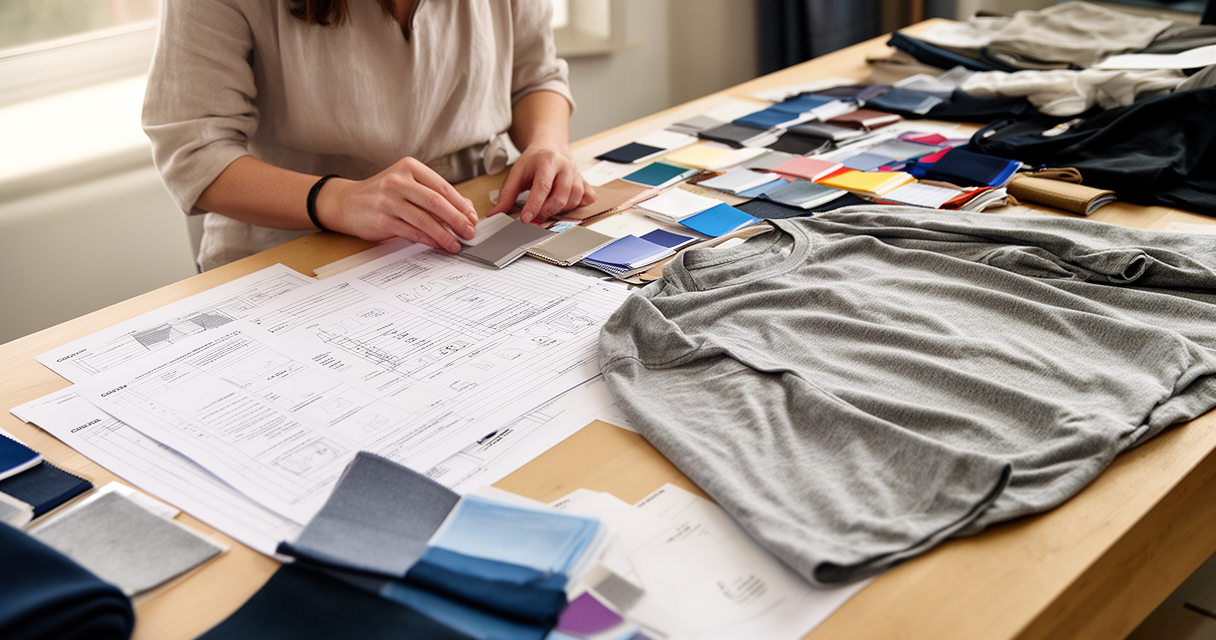
By experience. No finished tech pack yet means neither platform is the right next step. Build the tech pack first; a vague brief gets ignored on a directory and produces a worse quote from a managed service.
By cash-conversion timing. Production capital doesn’t move on a founder’s schedule. A deposit is due upfront, the balance is due before the goods ship, and freight plus duties are due before a single unit is sold — all cash out before any cash comes back in. Founders on r/smallbusiness repeatedly flag this timing gap as more dangerous than any factory-selection mistake.
Once the run is produced, the next operational problem tends to be fit: sizing and fit consistency becomes the next problem once real customers start receiving real product.
Vetting Red Flags: The Due-Diligence Checklist Either Route Requires
The same scrutiny applies whether a factory comes from a Maker’s Row listing or a Sourcify match — “vetted” is a claim, not a guarantee.
Vague ethics claims. Nearly every factory describes itself as ethical. On r/smallbusiness, sellers advise figuring out in advance which specific certifications actually meet a brand’s standard, then asking for them by name — a general claim of “ethical sourcing” with no certification attached is not verification.
“Made in USA” nuance. Final assembly happening domestically does not mean the fabric or trims are domestic. The FTC’s 2022 action against apparel company Lions Not Sheep is a documented general example of this exact gap: the company was penalized roughly $211,000 for ripping out “Made in China” tags and relabeling products “Made in USA.” That case has no connection to Maker’s Row or Sourcify factories — it’s cited here as evidence the labeling gap is real and enforced, not as an accusation against either platform’s network.
Slow or vague sampling communication, and refusal to share export or audit history, are both signs to walk away before a deposit changes hands.
Unrealistic MOQ promises — a factory agreeing to any quantity a founder asks for, with no pushback — often signals it isn’t actually equipped for the order.
The RFQ itself should be specific. r/smallbusiness sourcing threads consistently recommend sending a clear request that includes the tech pack, an MOQ range, a timeline, and a request to verify the factory’s export track record, relevant certifications or audits, and QC expectations upfront — before any money moves. That checklist applies equally to a “US-based” listing on Maker’s Row and a matched factory from Sourcify.
Alternatives: Finding a Manufacturer Without Either Platform
Neither platform is mandatory. Trade shows remain one of the most reliable ways to vet a factory face-to-face before committing — body language and a walkthrough of samples reveal things an email thread never will.
Referrals from other small apparel brands are frequently more reliable than cold outreach through any directory, paid or free — a factory that already delivered for someone else’s small run comes with real, checkable proof.
Other marketplaces exist too: Alibaba for overseas sourcing, along with regional manufacturer directories outside the US. Quality and vetting rigor vary widely across these, and the same due-diligence checklist above still applies.
r/smallbusiness sourcing discussions make one point repeatedly: many factories can handle small runs — they’re simply not easy to find through the obvious channels. A paid platform is a shortcut to visibility, not the only path to a working factory relationship.
Our Take: Which One Should You Actually Pick
For a founder with a finished tech pack, a realistic MOQ, and a preference for keeping costs down, Maker’s Row — or direct outreach entirely bypassing a paid platform — is the stronger pick. That founder has already done the work a managed service would otherwise charge for.
For a founder whose real bottleneck is time or sourcing expertise, and whose budget has room for a management fee, Sourcify is the stronger pick. Paying for that expertise is a legitimate use of capital when the alternative is months of unanswered emails.
For a founder who isn’t sure which of those two they are, the answer isn’t “try Maker’s Row first” or “book a Sourcify call” — it’s that they aren’t ready to pick a platform yet. Building a finished tech pack and running the MOQ-versus-breakeven math comes first.
Once a run is in hand, the next hurdle for most first-time brands is presentation: shooting and marketing the finished run is where the next round of decisions and spending happens.
Conclusion
The platform is secondary. The real decision is how much sourcing work a founder does themselves versus how much they pay someone else to do.
The practical next step: finish the tech pack and run the MOQ-versus-cashflow-breakeven math before contacting either platform. That math determines which column — self-serve directory or managed service — actually fits the budget and the timeline.
The platform picked won’t save a brand that skipped its homework — and it won’t be the reason a prepared founder’s first run succeeds, either.
FAQ
Is Maker’s Row worth the subscription?
For a founder with a finished tech pack and a realistic MOQ, yes — the subscription cost is small relative to what’s saved by not paying a managed-service fee. For a founder without those basics ready, the subscription buys access to a directory that will largely ignore them.
What does Sourcify actually cost?
Sourcify is reported to run on custom, quote-based pricing with no published rate card, likely including a service fee or margin on top of production cost. Confirm current terms directly with Sourcify before assuming any specific figure.
Domestic vs overseas for a first run?
Domestic (Maker’s Row’s focus) tends to mean faster communication and easier in-person quality checks, at a higher per-unit cost. Overseas (more common in Sourcify’s network) tends to mean lower per-unit cost with less direct oversight. Neither is automatically the right call — it depends on the founder’s cash position and tolerance for remote management.
What’s the biggest red flag when vetting a manufacturer?
Vague or unverifiable claims — “ethical,” “certified,” “audited” — with no specific certification named when asked. A factory that can’t produce documentation on request is a factory that hasn’t been through real verification.
Why can “Made in USA” still mean imported materials?
The label can legally reference final assembly location in some contexts, while fabric, trims, and other components were manufactured elsewhere. The FTC’s 2022 action against Lions Not Sheep, penalizing the company roughly $211,000 for mislabeling Chinese-made goods as domestic, illustrates how significant this gap can be when a brand misrepresents it outright.
Do I even need a platform, or can I find a factory directly?
A platform isn’t mandatory. Trade shows, referrals from other small brands, and other marketplaces (Alibaba, regional directories) all work as alternatives — factories capable of handling small runs exist outside paid directories, they’re just less visible.
References
- Maker’s Row official pricing and platform pages — makersrow.com
- Sourcify official platform and pricing pages — sourcify.com
- r/smallbusiness — apparel manufacturer sourcing and RFQ discussion threads
- r/smallbusiness — MOQ and cash-flow breakeven discussion threads
- r/smallbusiness — factory ethics/certification verification discussion threads
- Federal Trade Commission — enforcement action against Lions Not Sheep Marketing LLC, 2022 (ftc.gov)